Stroke sequelae that persist years after discharge: why they happen and what can be done
Stroke sequelae can persist long after hospital discharge. Find out why that happens, what neural plasticity is, and what options exist once the health system stops offering rehabilitation.
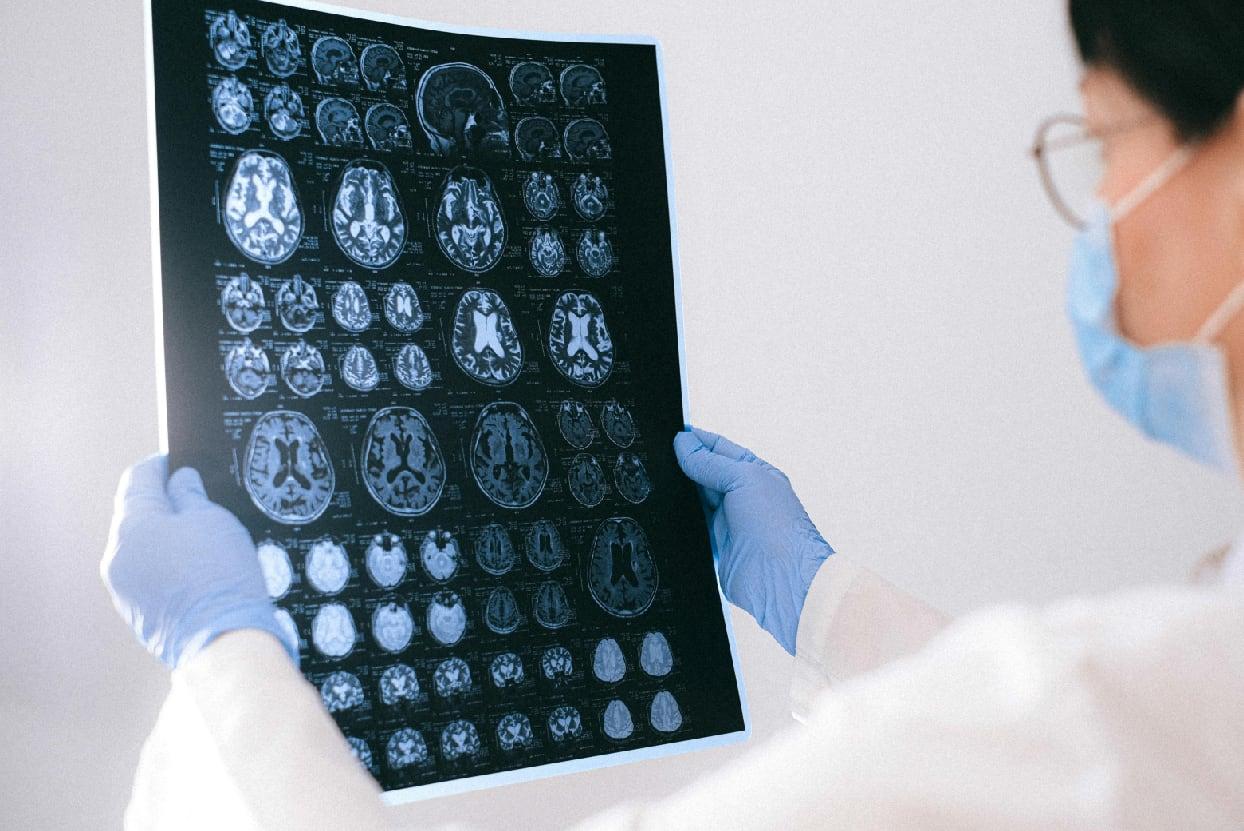
Why do sequelae persist after hospital discharge?
One of the most bewildering situations for families who have been through a stroke is that the patient is discharged from hospital, comes home… and the sequelae are still there. Perhaps there has been some improvement since the worst days, but some things never quite come back: movement in the arm, clarity of speech, memory, energy.
The question that arises almost inevitably is: is this as good as it gets?
The short answer is no. The long answer requires understanding how neurological recovery actually works.
The brain never stops reorganising: what neural plasticity is
When a stroke damages an area of the brain, it does not always destroy the cells permanently. In many cases part of the affected area is left in a state of «stunning» —what neurologists call the ischaemic penumbra— which can recover if it receives the right stimulus.
In addition, the brain has an extraordinary capacity to reorganise itself: when a neural pathway is damaged, other areas of the brain can learn to compensate for that function. This process is called neuroplasticity, and it happens throughout life, although it is most intense in the first months after the injury.
The problem is that neuroplasticity does not switch itself on. It needs repeated, intense stimuli, specific to each function you want to recover. Without that stimulus, the brain «learns not to use» the lost function —a phenomenon known as learned non-use— and the sequelae become entrenched.
The most common sequelae that persist years after a stroke
Not all stroke sequelae are visible. Some are obvious from the start; others take time to appear or go unnoticed in a hospital setting. The most frequent are:
- Hemiplegia or hemiparesis: weakness or paralysis on one side of the body, affecting the arm, the leg or both. It is the most common motor consequence after a stroke.
- Aphasia or speech difficulties: trouble finding words, building sentences or understanding what others say. It can be devastating for social and working life.
- Post-stroke fatigue: exhaustion out of all proportion to any physical or mental effort. It is not always recognised as a consequence of the stroke, but it affects more than 50% of survivors.
- Cognitive changes: memory lapses, difficulty concentrating, slowed processing, or problems with executive functions such as planning or making decisions.
- Emotional changes: post-stroke depression, anxiety, irritability or emotional lability. They are as common as the physical sequelae and often less treated.
- Dysphagia: difficulty swallowing, which can compromise nutrition and cause respiratory complications.
- Neuropathic pain: burning, tingling or pain in the affected area, even without movement.
The myth of the recovery «plateau»
For decades, healthcare assumed that neurological recovery had a ceiling: after the first six months —and at most the first year— whatever had not been recovered never would be. This idea is known as the recovery plateau.
Modern neuroscience has dismantled that myth decisively. Studies published in journals such as Neurorehabilitation and Neural Repair and Stroke show that patients can keep improving years after a stroke when they are given the right treatment. Brain plasticity does not vanish at six months: what happens is that the conventional health system tends to withdraw rehabilitation at that point.
The practical consequence is that thousands of patients reach a state of «stabilised» sequelae not because they cannot improve, but because they never received the stimulus needed to keep progressing.
When does it stop making sense to continue rehabilitation?
This is a question no professional can answer with certainty without assessing the specific case. What can be said is that the factors with the greatest influence on the potential for improvement are:
- Type and extent of the lesion: a small lesion in one specific area is not the same as extensive damage across several.
- Time since the stroke: the more recent, the more plasticity is available. But significant improvements have been documented even in the chronic phase —more than a year on.
- Intensity and specificity of previous treatment: a patient who never had intensive rehabilitation has more room for improvement than one who has been doing it for years.
- General health and motivation: factors that shape the response to treatment.
What the evidence indicates clearly is that a lack of improvement with previous treatment does not mean there are no further options. It means that treatment was not the right one, or was not intensive enough, or both.
What to do when sequelae persist and the health system has nothing more to offer
If the professionals treating the patient have said that they have «reached their ceiling» or that «there is nothing more to be done», there are several steps worth taking before accepting that as final:
- Seek a second neurological opinion from a specialist in neurorehabilitation, not only in diagnostic neurology. They are different specialities.
- Assess whether the treatment received was intensive enough. Two physiotherapy sessions a week for six months is very different from daily sessions with a multidisciplinary team.
- Find out about centres specialising in chronic-phase neurorehabilitation. Not every rehabilitation centre has the same capacity to work with patients a long way from their injury.
- Assess the full profile of sequelae: motor, cognitive, communicative, emotional. Sometimes what is visible gets treated while the cognitive or emotional consequences —often those with the greatest impact on quality of life— are ignored.
Foltra's approach: rehabilitation after others have discharged you
At Centro Sanitario Foltra we treat patients with stroke sequelae at every stage, including the chronic phase. Many of our patients come to us after being discharged from conventional rehabilitation services, having «stabilised» their sequelae, with the feeling that there was nothing more to be done.
Our protocol combines neurostimulation, intensive neurological physiotherapy, speech therapy, occupational therapy and neuropsychology in a coordinated, high-intensity approach. We do not promise results we cannot guarantee: what we do is assess each case honestly and work to the limit of each person's potential.
If you want to know whether we can help in your case, the first step is an initial assessment, where our medical team looks at the situation and determines whether Foltra's protocol can bring improvements.
To read further: how long does recovery from a stroke really take? and how aphasia rehabilitation after a stroke works.