How long does recovery from a stroke take? What nobody tells you in hospital
Recovery from a stroke does not end at six months. Find out what the real phases of neurological recovery are, why rehabilitation is withdrawn too early, and when it still makes sense to seek treatment.
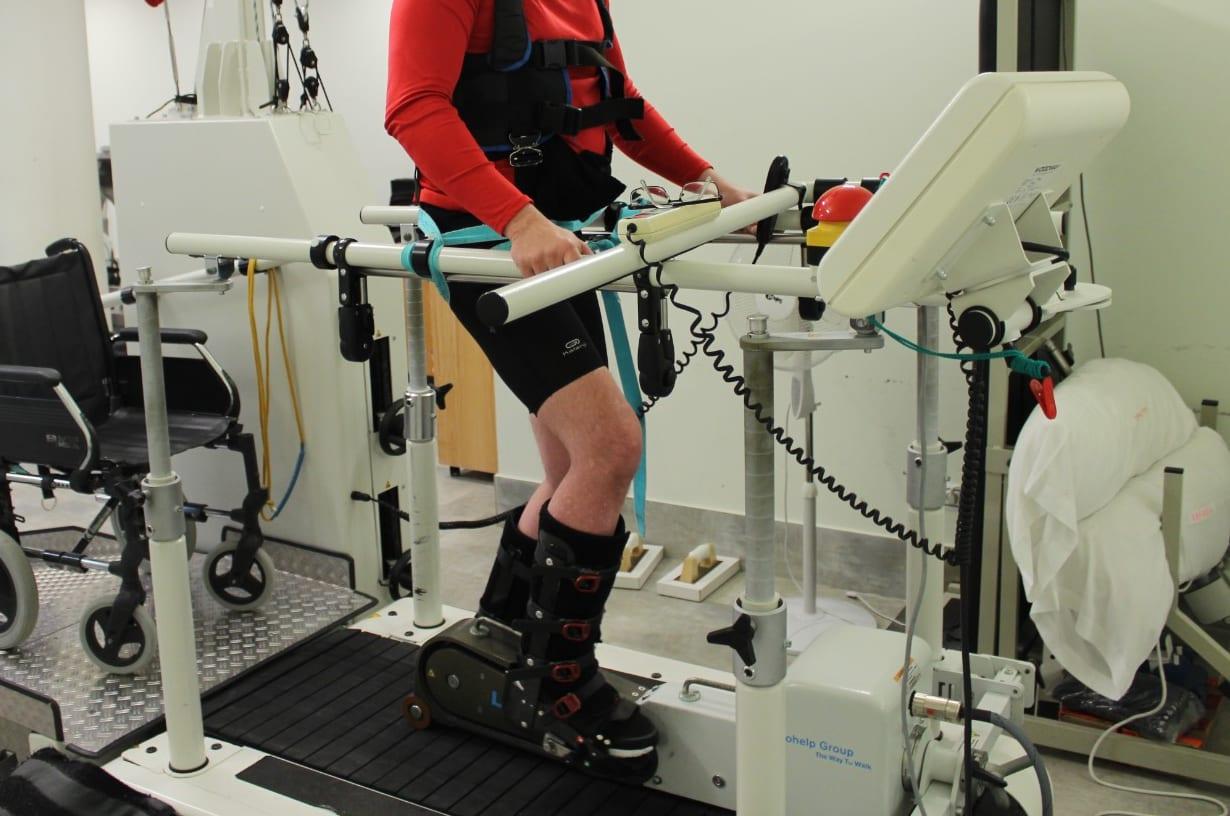
The question nobody answers properly in hospital
When someone has a stroke, their family has hundreds of questions. One of the most urgent —and one of the least clearly answered— is: how long will it take to recover?
The honest answer is uncomfortable because it is not simple. What we can say is that most patients and their families leave hospital with expectations that do not match the reality of neurological recovery. And that gap between expectation and reality causes avoidable suffering.
What usually happens in the first few months
The first three months after a stroke are the period of greatest spontaneous recovery. The brain is at its most plastic: it re-establishes connections, redistributes functions, and in many cases the patient improves visibly almost week by week. That initial pace creates hope, and understandably so.
Between three and twelve months, recovery continues, but it usually becomes slower and less dramatic. It is also the period in which the conventional health system tends to reduce the intensity of treatment and, in many cases, discharge the patient from rehabilitation.
From the first year onwards, the dominant narrative in many clinical settings is that «whatever has not come back is not going to come back». That idea —scientifically superseded, as we shall see— is still very widespread, and it leads thousands of families to accept a degree of disability that could be reduced.
Phases of stroke recovery: what to expect at each stage
Clinically, stroke recovery is divided into three broad phases:
Acute phase (first 2-4 weeks)
The main goal is medical stabilisation. Early rehabilitation begins, to prevent complications (spasticity, pressure sores, aspiration pneumonia) and to make use of the window of maximum plasticity. The intensity of treatment in this phase is decisive for later recovery.
Subacute phase (1-6 months)
The fastest recovery happens here. Neurological physiotherapy, speech therapy and occupational therapy are essential. A patient can go from being unable to move an arm to regaining part of its function within a few weeks, given the right treatment. It is also the phase in which compensation habits —good and bad— become established.
Chronic phase (more than 6 months)
The rate of improvement slows, but it does not disappear. Neuroplasticity is still functional. What changes is that a more specific, more intense and more sustained stimulus is needed to make progress. Centres specialising in chronic-phase neurorehabilitation work precisely at this stage, and they document functional improvements even in patients five or ten years on.
Factors that determine how much and how a stroke patient recovers
There is no single prognosis. Recovery depends on a combination of factors that have to be assessed case by case:
- Type of stroke: ischaemic or haemorrhagic, and within each type, the area and extent of the lesion.
- Time to medical treatment: every minute counts in the acute phase. Rapid access to thrombolysis or thrombectomy can greatly reduce the permanent damage.
- Intensity of rehabilitation in the acute and subacute phases: the most modifiable factor, and the one that makes the biggest long-term difference.
- The patient's age: younger patients tend to have greater plasticity, but older adults also recover when they receive the right treatment.
- Prior health: high blood pressure, diabetes, a sedentary lifestyle or smoking all affect the capacity to recover.
- Family support and environment: patients with an involved family and an adapted home achieve better functional outcomes.
- Mental health: post-stroke depression —present in up to 40% of patients— significantly reduces the capacity to recover if it is left untreated.
Why conventional rehabilitation is withdrawn too early
The public health system has limited resources and discharge criteria based on objective parameters: ability to walk, independence in basic activities of daily living, absence of acute medical complications. Once the patient reaches a minimum level of autonomy, they are usually discharged from rehabilitation even though their potential for improvement is not exhausted.
This is not a criticism of the health system: it is a consequence of caseload pressure and the logic of managing resources. But the practical result is that many patients «stabilise» with sequelae that could have been reduced with more time and more intensive treatment.
Intensive private rehabilitation in specialist centres exists precisely to fill that gap between what the public system offers and what the patient still needs.
Signs that recovery can continue
Although every case is different, there are signs that a patient has unrealised potential for improvement:
- They have been discharged from rehabilitation, but the patient feels that «something is missing» in the function of the arm, in speech or in memory.
- The rehabilitation they received was low in intensity (few sessions a week, over a short period).
- The patient has never had specific neuropsychology or speech therapy for the cognitive or communication sequelae.
- The sequelae present are cognitive or emotional and have never been addressed by a specialist.
- The patient is under 60 and the injury was less than five years ago.
None of these signs is conclusive. Only a specialist assessment can determine whether there is real room for improvement.
When to go to a specialist neurorehabilitation centre
If the patient has been discharged from rehabilitation and the sequelae persist in a way that significantly affects their quality of life or their family's, it makes sense to seek a second opinion at a specialist neurorehabilitation centre.
At Centro Sanitario Foltra we assess patients at any phase of stroke recovery. Many of those who come have lived with their sequelae for years and have assumed that this was their permanent state. In a significant proportion of these cases, our protocol of neurostimulation and intensive rehabilitation has achieved improvements the patient and their family did not expect.
You can read more about our stroke treatment in the section on stroke and brain injury rehabilitation, or take the first step by requesting an initial assessment.