Encefalopatía multiquística infantil
Multicystic encephalopathy: from a prognosis of quadriplegia to a normal life
Prognosis at birth: blindness, muteness, deafness and quadriplegia. Today, aged 9, he goes to school and plays sport. A real case documented at Centro Sanitario Foltra.
A newborn with 25 minutes of cardiorespiratory arrest. Prognosis: blindness, muteness, deafness and spastic quadriplegia. He is now 9 years old, goes to school and plays sport. This is one of the most thoroughly documented cases at Centro Sanitario Foltra.
Before coming to Foltra
Fifteen days into the pregnancy's final stage, the baby suffered a vasa praevia —a serious obstetric complication— which caused massive haemorrhage and 25 minutes of cardiorespiratory arrest after the emergency caesarean. The electroencephalogram (EEG) was flat. Visual evoked potentials (VEPs) were absent. After intensive resuscitation, some electrical activity appeared on the EEG, which halted the withdrawal of support that had already been planned.
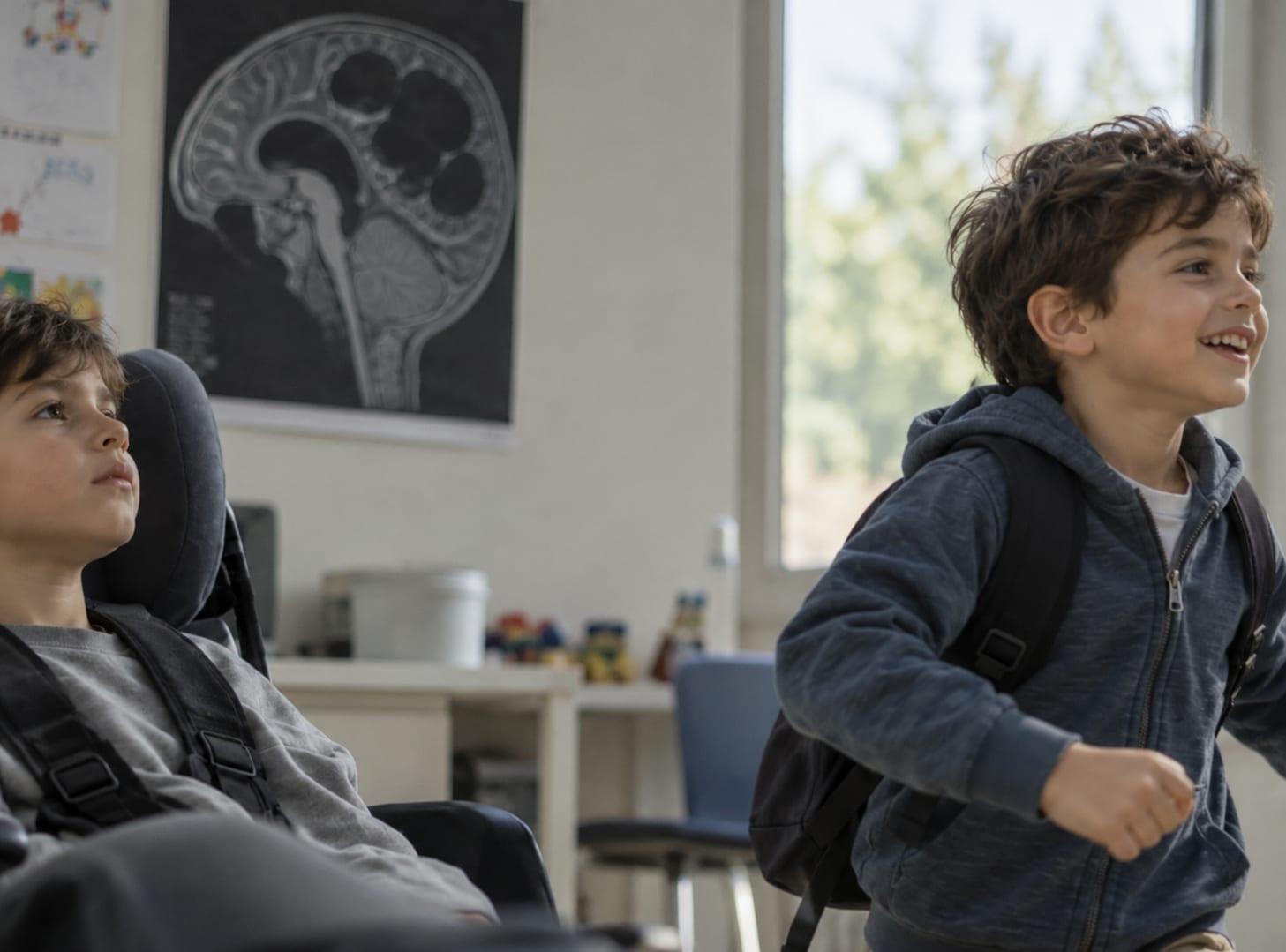
Brain magnetic resonance imaging (MRI) showed extensive damage: multicystic encephalopathy. The medical prognosis was clear and blunt: blindness, muteness, deafness and spastic quadriplegia. It was in those circumstances that the child was admitted to Centro Sanitario Foltra.
Treatment at Foltra
Foltra's medical team began medical and rehabilitative treatment adapted to severe perinatal brain damage, addressing the child's neurological, motor and sensory function at the same time. Treatment ran through the first year of life, with continuous follow-up.
Foltra's approach starts from a premise that contradicts the conventional prognosis: the developing brain —especially in the first years of life— retains exceptional plasticity. With the right stimulus and the right intensity, damaged structures can reorganise and regain function. Not always. Not in every case. But the possibility exists, and it deserves to be explored.
The outcome
After a year of treatment, the brain MRI was repeated. The same radiologist who had issued the initial diagnosis signed a certificate stating that «the normalisation of the brain and the disappearance of the cystic cavities cannot be understood». The structural damage shown on the first scan had gone.
At two years old, the child was walking, talking and playing. Today, aged 9, he leads a fully normal life: he is in school, plays sport and does not have the sequelae the prognosis treated as inevitable. The case has been published in the medical literature.
What does this mean for families?
This case is not a miraculous exception: it is the result of applying, intensively and systematically, what neuroscience already knows about cerebral palsy and perinatal brain damage. Neurological plasticity in childhood is real and documented. The conventional health system, however, often does not have the time, the intensity or the protocol to make use of it.
If your child has been diagnosed with perinatal brain damage, cerebral palsy or another severe neurological condition, and you have been told that the scope for recovery is minimal, this case is worth knowing about. Not to create false expectations, but to understand that an individual assessment can open doors that the standard prognosis closes.